
Well below the lower Jct sign for Ribbon Falls (via creek), the North Kaibab Trail crosses through a lush area of small trees, shrubs, and tall grasses. Sparrows (?) with black bodies and bright white markings whiz by.
Here the diabase slopes are black (Yi, 1070 Ma). A course dark sand crunches under foot along the gently meandering trail.
On a gray morning in 2025, it’s a strange but joyful feeling, otherworldly but deeply here.
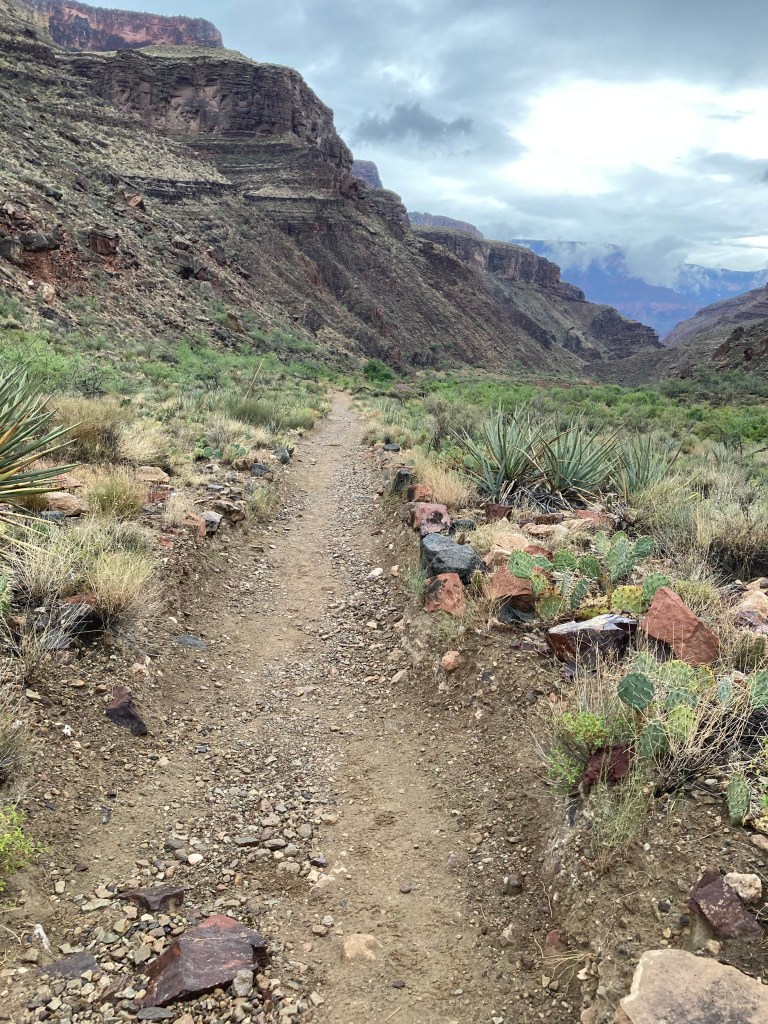
The lush area opens to a strange and inviting sight down trail. An outcropping of vertical Bass rocks comes into greater focus with each step. I suspect that the start of the Rama Schist along the nearby slope, not nearly as captivating, eludes passersby.
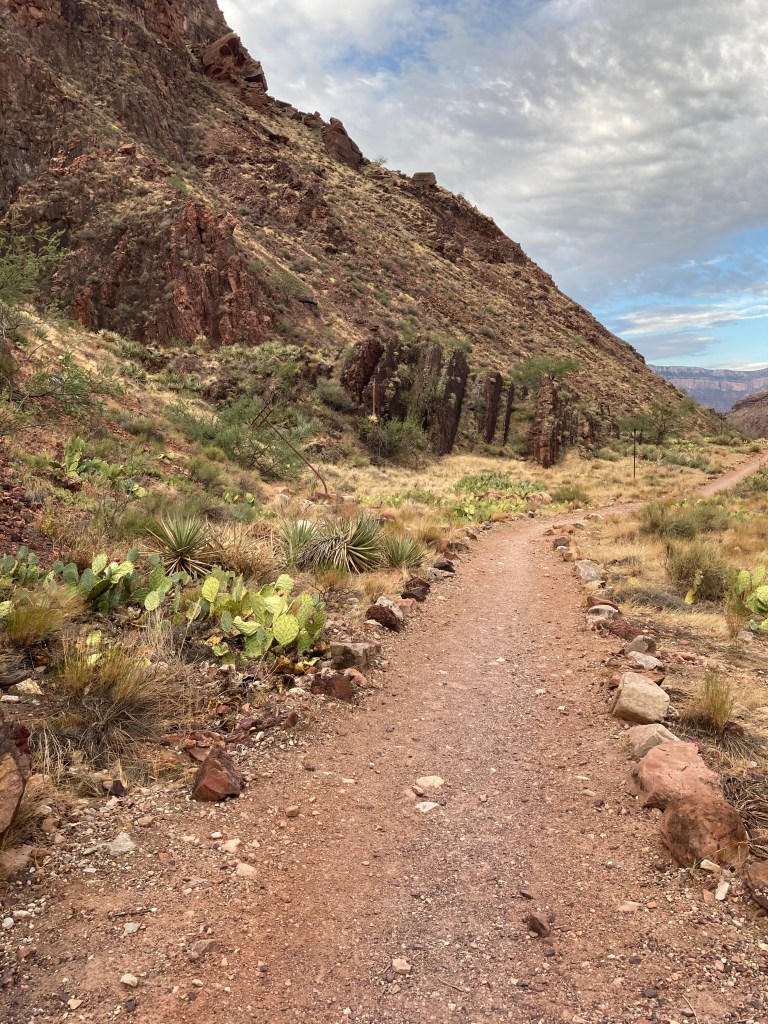
It gets very exciting nearing the trailside Bass (Yb, 1255 Ma).
Notice the pink and dark gray Rama Schist (Xr, 1751 Ma) immediately up slope.
Zoroaster Granite (Xgr, 1662-1698 Ma), harder to make out, starts on the slope above the Bass.
The Rama Schist and Zoroaster Granite exposed here continue through the Box, at the river, and along Pipe Creek. The Granite continues up canyon to just short of Tapeats Narrows.
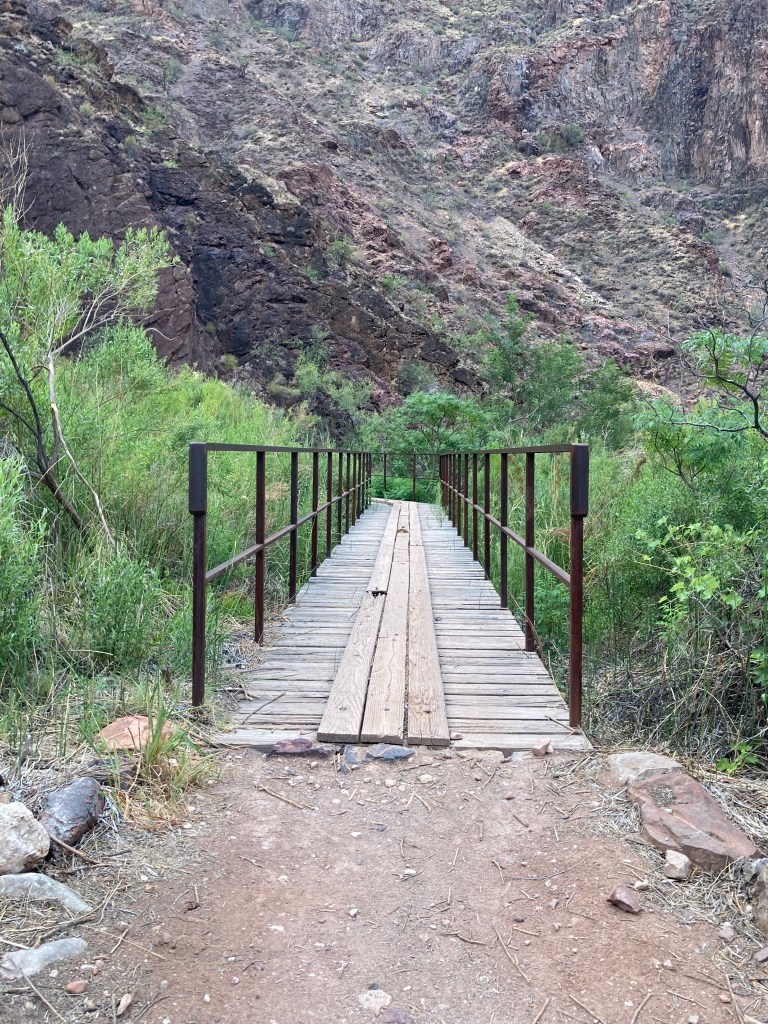
The trail is in Bass as it approaches a footbridge over a swampy area. Ahead and sloping down (from upper left) are some large brown vertical sheets of Bass (Yb). Behind the Bass in the upper right is a Rama Schist & Gneiss (Xr) cliff. Between them in this photo is a slope of Zoroster Granite (Xgr). However, when seen up close from the trail, there is also a Rama Schist slope directly behind the Bass that is not visible at this angle. See the next two photos for a view of each of these rock layers.
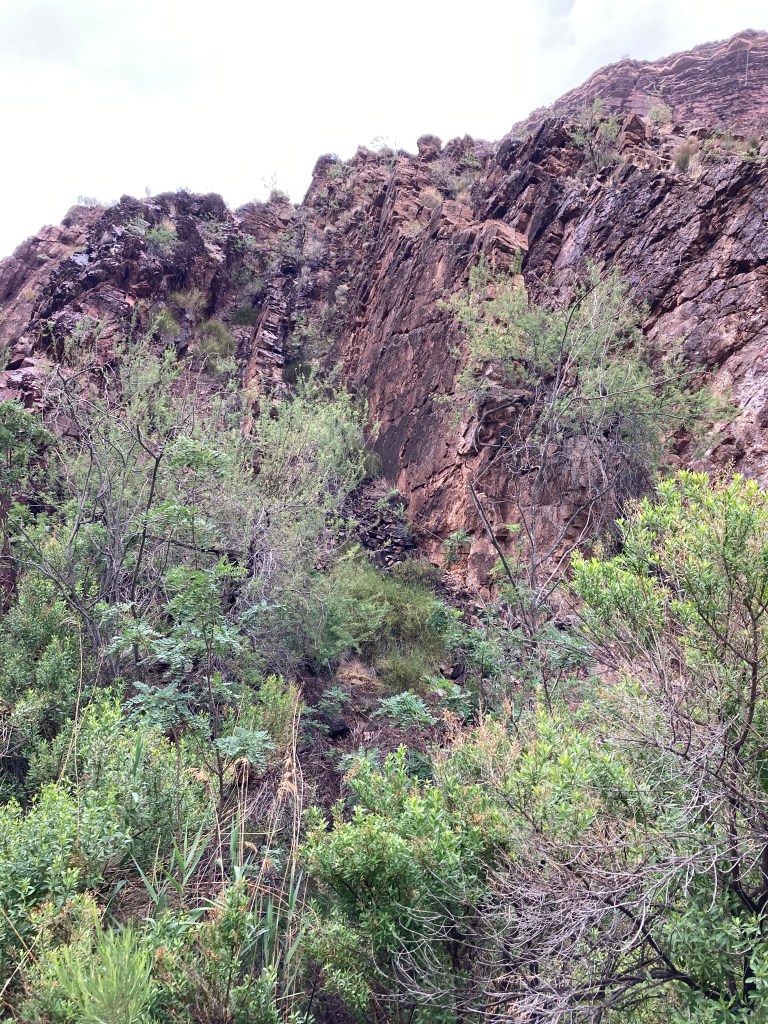
Side angle of the Bass from the trail as you pass below.
The Bass rocks formed in shallow seas during the assembly of supercontinent Rodinia. Far away Tectonic movements compressed the basement rocks and formed folds, which became basins. Bass at 1255 Ma is the oldest Grand Canyon Supergroup member and the oldest Grand Canyon rock with fossils.

Side angle of the presumed Rama Schist a moment later down trail.
Rama Schist & Gneiss formed 1741 Ma. As volcanic islands subducted below and collided with the continental crust, the volcanic and surface materials heated and churned. Some of the material formed mountains, and other material sunk below. Molten materials later intruded from magma as Zoroaster and other granites. The mountains eroded and the lower material uplifted. The schists and gneiss that can be seen now at Grand Canyon formed in intense heat and pressure.
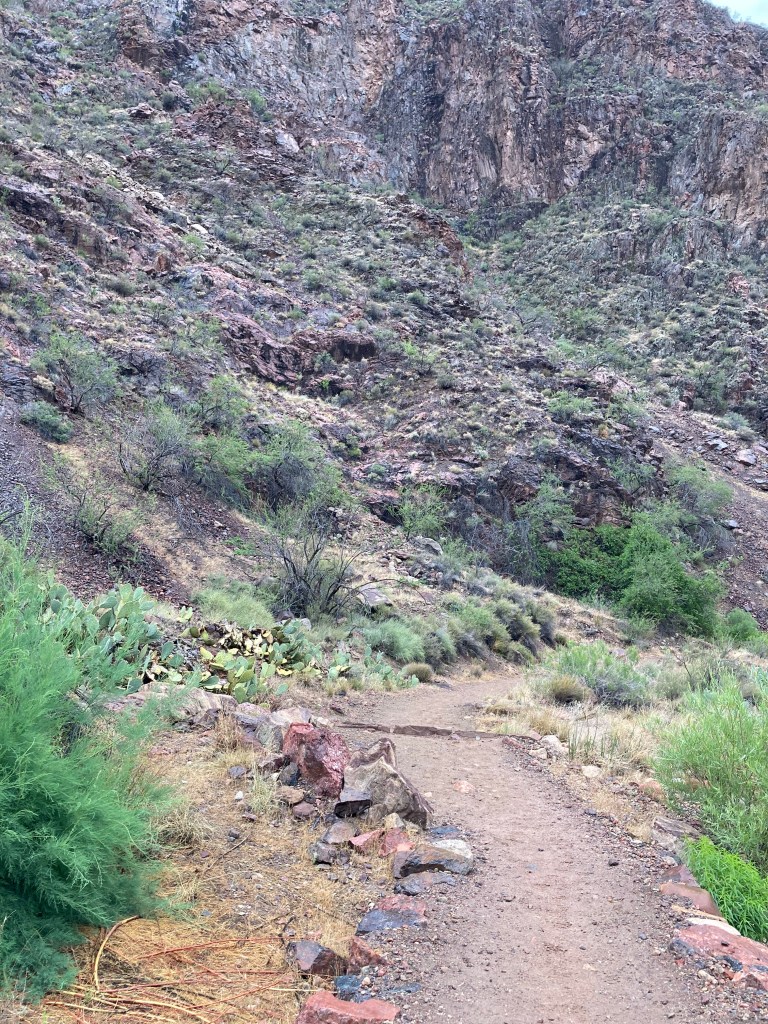
Looking again at the Rama Schist & Gneiss cliff and the Zoroaster Granite (Xgr) slope. Trail in Xgr.
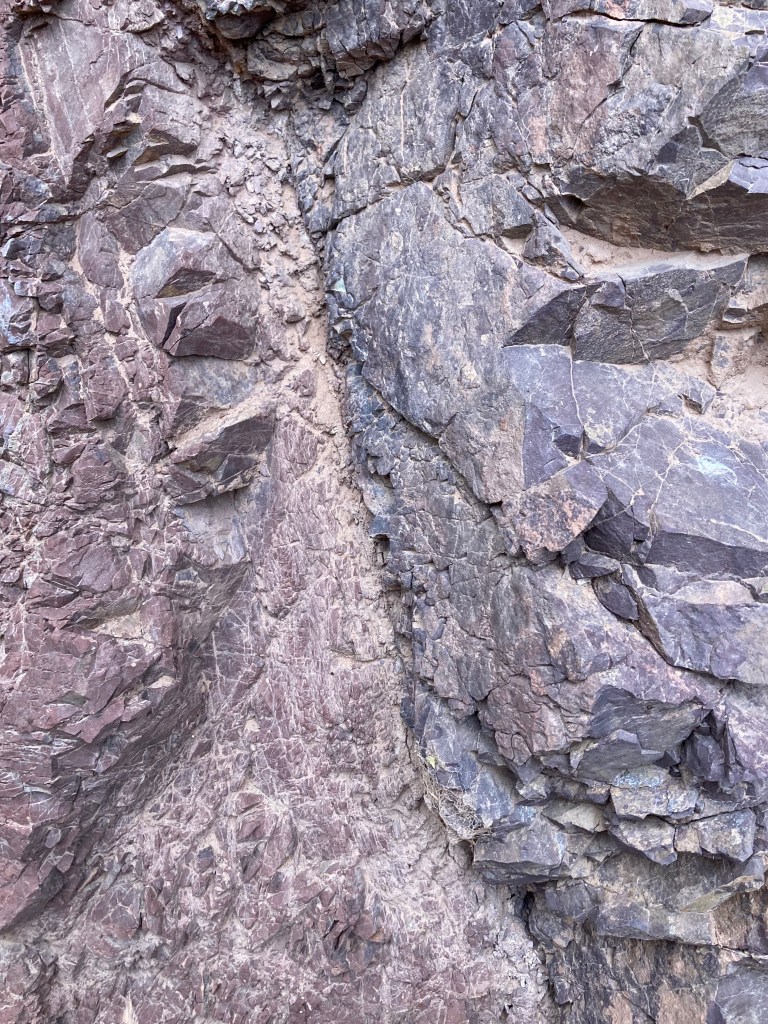
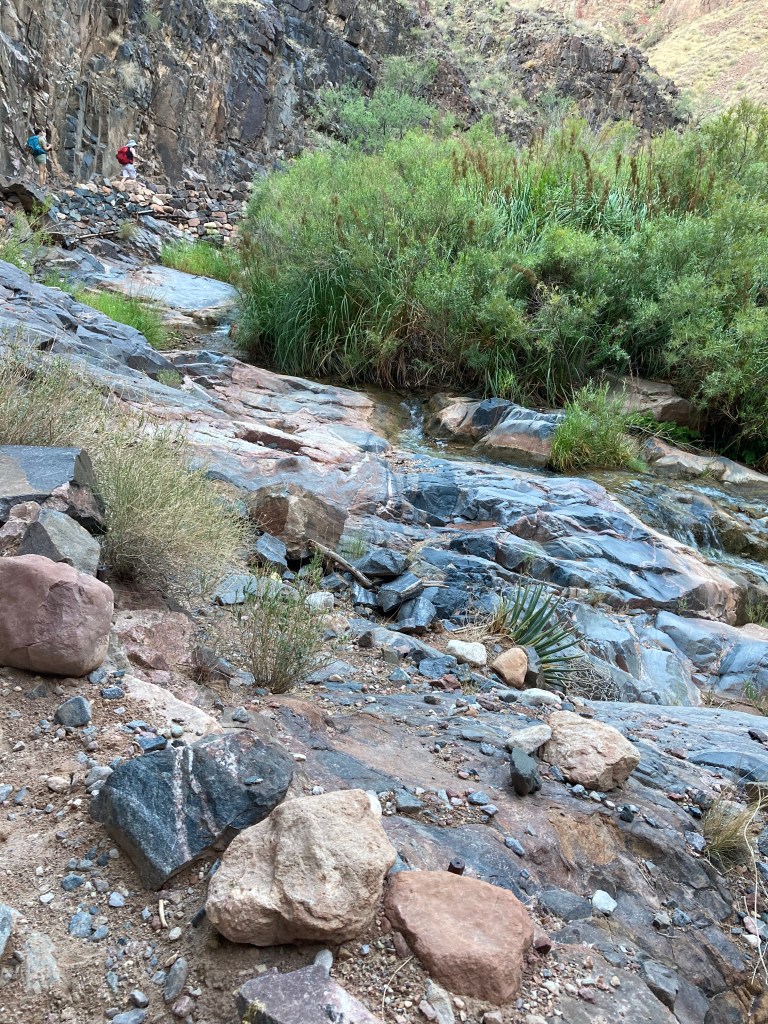
Just a moment further, for the first time, the trail enters Rama Schist & Gneiss (1751 Ma). This is trailside, maybe knee or waist high.
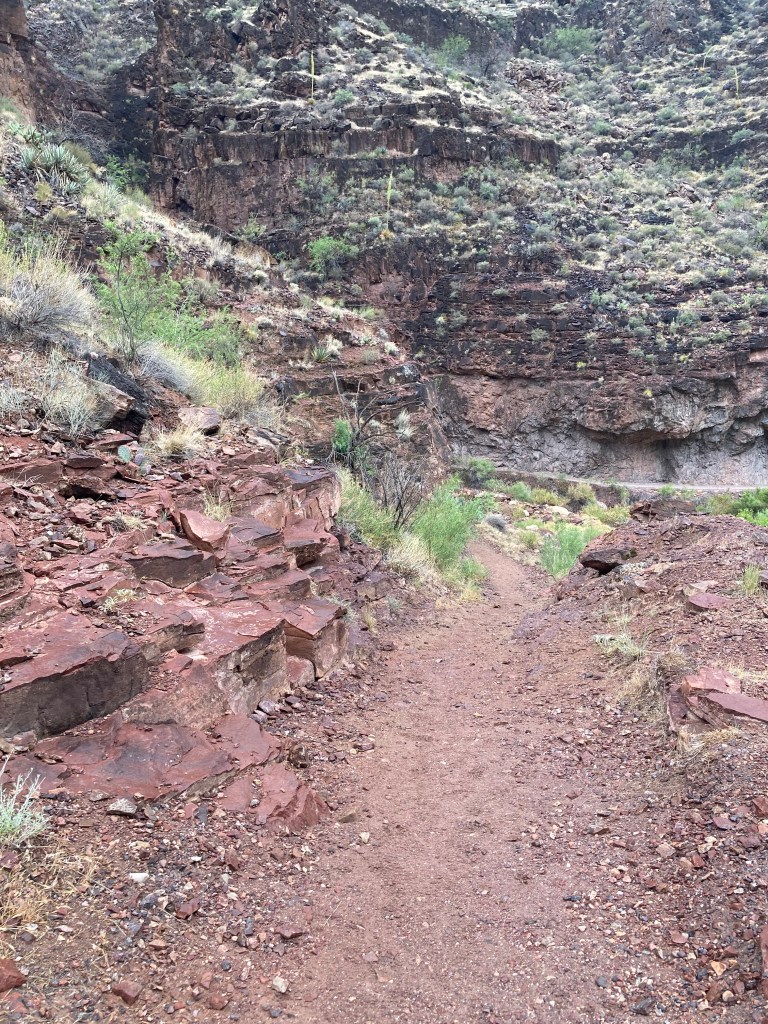
The trail curves gently around one last tour through the Bass Formation, seen here as fairly flat milk chocolate colored rocks in the foreground.
The trail then makes a hard right from Bass into Rama Schist a lighter shade beneath a brown Bass ledge.
I linger a moment, touching the Bass rock with my hand.
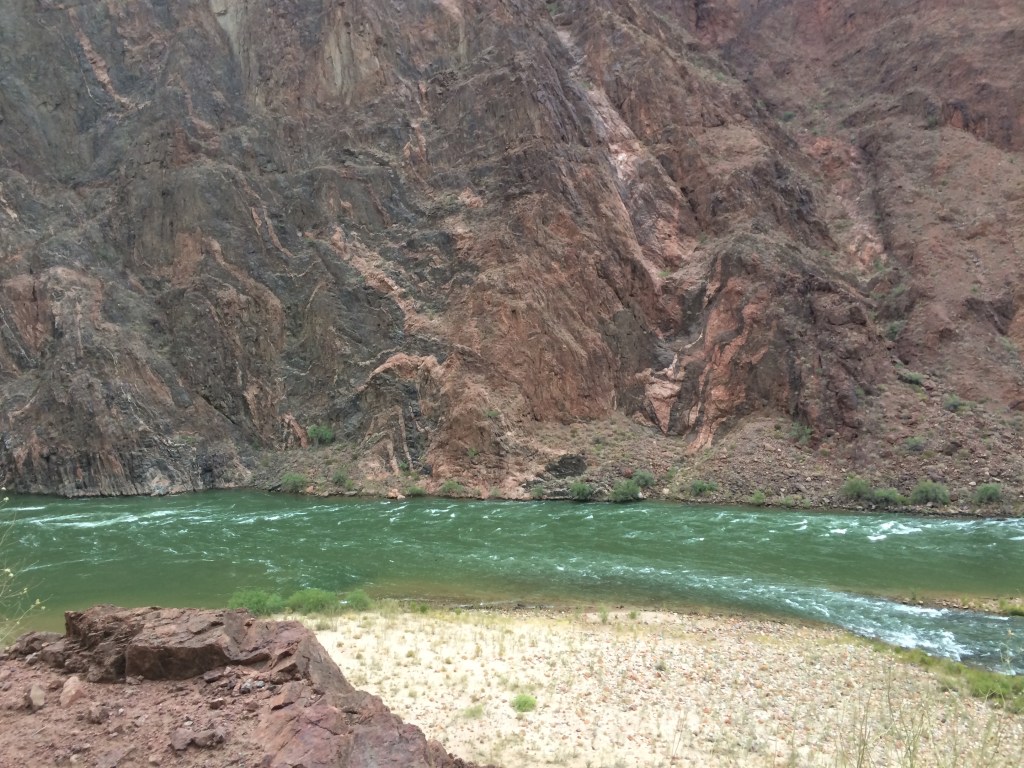
Folded Rama Schist & Gneiss at the contact with Zoroaster Granite (Xgr, right). Standing on River Trail between Silver Bridge and River Resthouse.
Rama Schist & Gneiss polished at Pipe Creek – Bright Angel Trail
 RocksTalk